
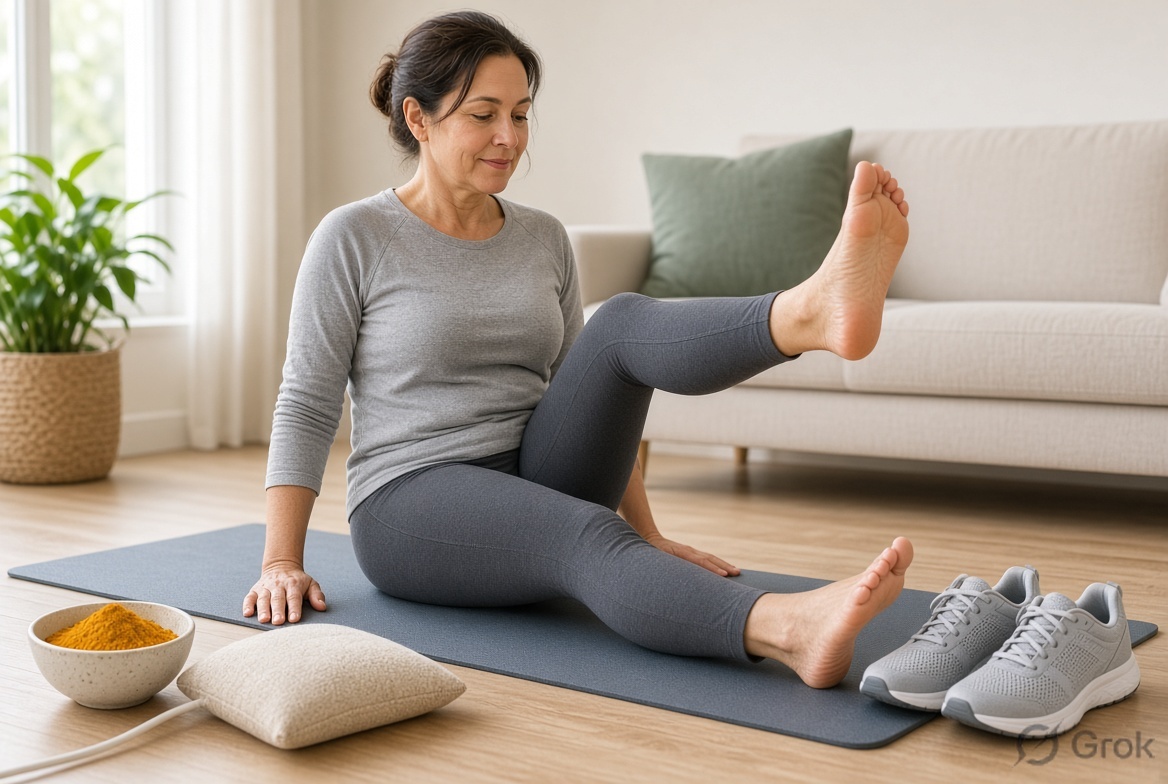
Home Remedies for Knee Pain
Knee pain is extremely common and can result from osteoarthritis, injury, overuse, excess weight, muscle weakness, or inflammatory conditions. While severe or persistent pain needs medical evaluation, many mild to moderate cases improve with consistent home care and lifestyle adjustments.
This guide shares practical home remedies for knee pain that focus on reducing inflammation, improving strength, and protecting the joint.
Common Causes of Knee Pain
- Osteoarthritis (wear and tear)
- Ligament or meniscus strain
- Excess body weight increasing joint load
- Weak quadriceps and hip muscles
- Overuse from sudden increase in activity
- Inflammatory conditions
1. Hot and Cold Therapy
For acute pain and swelling, use a cold compress for 10–15 minutes several times a day. For chronic stiffness, warm compresses or a warm water bag can relax muscles and improve comfort. Always wrap ice packs in a cloth.
2. Gentle Strengthening Exercises
Strong muscles around the knee (especially quadriceps and hips) reduce load on the joint. Simple exercises such as straight leg raises, seated knee extensions, wall sits (if comfortable), and glute bridges can be very helpful. Start slowly and increase gradually.
3. Weight Management
Every extra kilogram increases force on the knees during walking. Even modest weight loss significantly reduces pain for many people with knee osteoarthritis.
4. Turmeric and Anti-Inflammatory Foods
Turmeric contains curcumin, which has natural anti-inflammatory properties. Using turmeric regularly in cooking (with black pepper) is a simple daily habit. Ginger and a diet rich in vegetables and omega-3 sources also support lower inflammation.
5. Adequate Rest and Activity Balance
Avoid complete inactivity, as it weakens muscles further. At the same time, respect pain signals and avoid high-impact activities that aggravate symptoms. Low-impact options such as walking on level ground, cycling, or swimming are usually better tolerated.
6. Supportive Footwear and Posture
Wear comfortable, well-cushioned shoes. Avoid prolonged sitting with bent knees or standing in one position for too long.
7. Gentle Stretching
Stretching the hamstrings, calves, and quadriceps helps maintain flexibility and can reduce strain on the knee joint.
Helpful Daily Habits
- Perform simple knee-strengthening exercises most days
- Use cold or heat as needed for symptom relief
- Maintain a healthy body weight
- Choose low-impact movement
- Include anti-inflammatory foods regularly
When to See a Doctor
Seek medical care if knee pain is severe, follows an injury, causes significant swelling or instability, locks or gives way, or does not improve with several weeks of home care. Imaging or specific treatment may be required.
Frequently Asked Questions
Can knee pain be cured completely with home remedies?
Many cases of mild osteoarthritis and overuse pain improve significantly. Structural damage or advanced arthritis may need additional medical or physiotherapy support.
Is walking good or bad for knee pain?
Moderate walking on even surfaces is usually beneficial. Very long walks or walking on uneven ground may aggravate symptoms in some people.
Do knee caps or braces help?
Some people find temporary relief with a simple knee support during activity. They should not replace strengthening exercises.
Final Words
Home remedies for knee pain focus on reducing inflammation with cold/heat therapy, strengthening the muscles that support the joint, managing body weight, staying gently active, and using anti-inflammatory foods such as turmeric. Consistency with these approaches often brings meaningful relief and better long-term joint function.