
Best Yoga Asanas for Prostate Health
Prostate health becomes increasingly important for men after the age of 40. Issues such as frequent urination, incomplete emptying of the bladder, discomfort in the pelvic region, and reduced flow are common. While medical check-ups are essential, gentle yoga can play a supportive role by improving pelvic circulation, reducing tension in the pelvic floor, and promoting better overall urogenital function.
This guide presents the best yoga asanas for prostate health that are safe, accessible, and suitable for regular practice. These poses focus on the pelvic region, hips, lower back, and core without creating excessive pressure.
How Yoga Supports Prostate Health
Yoga improves blood flow to the pelvic area, reduces chronic tension in the pelvic floor muscles, supports healthy posture, and helps manage stress. Stress and prolonged sitting are known contributors to pelvic congestion. Regular gentle movement counters these effects. Yoga also encourages better breathing and body awareness, which many men lack when it comes to the pelvic region.
Important Safety Guidelines
- Practice on an empty stomach or at least 2–3 hours after a meal
- Move slowly and never force any pose
- If you have been diagnosed with prostate enlargement or other conditions, consult your doctor before starting
- Stop immediately if you feel sharp pain
- Consistency matters more than intensity
Best Yoga Asanas for Prostate Health
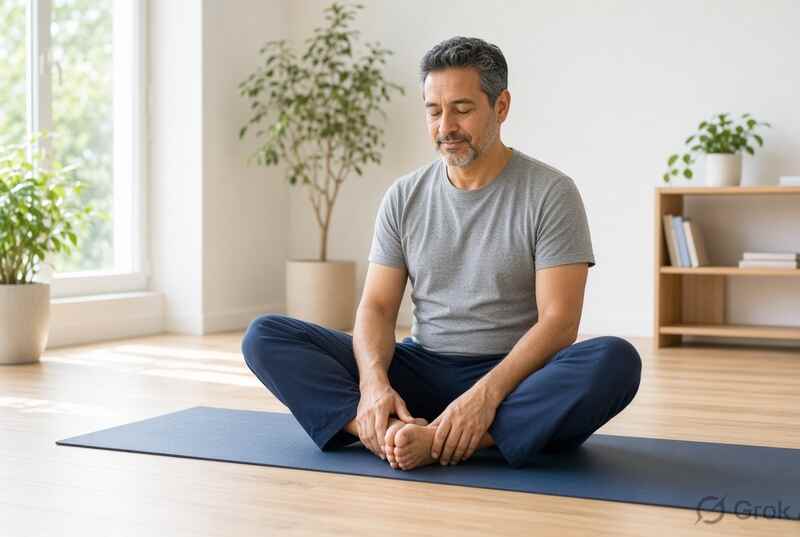
1. Baddha Konasana (Butterfly Pose)
Sit with the soles of the feet together and knees dropping outward. Hold the feet and gently flap the knees or stay still while breathing deeply. This pose opens the hips and improves circulation in the pelvic region.
Stay for 1–3 minutes while breathing slowly.
2. Supta Baddha Konasana (Reclining Butterfly)
Lie on your back with the soles of the feet together and knees open. Place pillows under the knees if needed for comfort. This is a deeply relaxing variation that reduces tension in the pelvic floor and lower abdomen.
3. Malasana (Garland Pose / Deep Squat)
A supported deep squat helps stretch the pelvic floor and inner thighs. Keep the heels down if possible or support them with a folded blanket. This pose is excellent for pelvic circulation when practiced gently.
4. Setu Bandhasana (Bridge Pose)
Lie on your back, bend the knees, and lift the hips while pressing into the feet. Bridge pose strengthens the glutes and lower back while creating a mild inversion effect that can support pelvic blood flow.
Hold for 5–8 breaths and repeat 3–4 times.
5. Viparita Karani (Legs-Up-the-Wall Pose)
One of the most restorative poses. Lie on your back and rest the legs vertically against a wall. This gentle inversion reduces swelling, calms the nervous system, and promotes circulation away from the legs and toward the core.
Stay for 5–10 minutes.
6. Paschimottanasana (Seated Forward Bend) – Gentle Version
Sit with legs extended and fold forward only as far as comfortable. A mild forward bend massages the abdominal organs and stretches the back of the body. Avoid aggressive stretching.
7. Cat-Cow and Pelvic Tilts
These simple movements improve mobility in the spine and pelvis. They are especially useful for men who sit for long hours.
Suggested Practice Routine
A 15–20 minute daily sequence can be highly effective:
- Cat-Cow – 1 minute
- Butterfly Pose – 2 minutes
- Bridge Pose – 3 rounds
- Supported Squat or Malasana – 1 minute
- Legs-Up-the-Wall – 5–7 minutes
- Final relaxation – 2–3 minutes
Additional Lifestyle Support
- Avoid prolonged sitting without breaks
- Stay well hydrated
- Maintain a healthy body weight
- Limit excessive caffeine and alcohol if they irritate the bladder
- Include strength training and walking in your weekly routine
Frequently Asked Questions
Can yoga cure prostate problems?
Yoga is a supportive practice, not a cure. It can improve comfort, circulation, and quality of life, but medical conditions require proper diagnosis and treatment.
How often should I practice?
Daily or at least 5 days a week produces the best results. Short consistent sessions are better than occasional long ones.
Is it safe after 50?
Yes, when practiced gently and with attention to comfort. Many of the recommended poses are restorative and suitable for older adults.
Final Words
The best yoga asanas for prostate health focus on opening the hips, improving pelvic circulation, reducing muscular tension, and calming the nervous system. Butterfly pose, reclining butterfly, bridge, legs-up-the-wall, and gentle squats form an excellent foundation. When combined with regular movement, good hydration, and healthy body weight, these practices offer meaningful long-term support. Start slowly, listen to your body, and remain consistent. Over weeks and months, many men notice improved comfort and better pelvic awareness.