
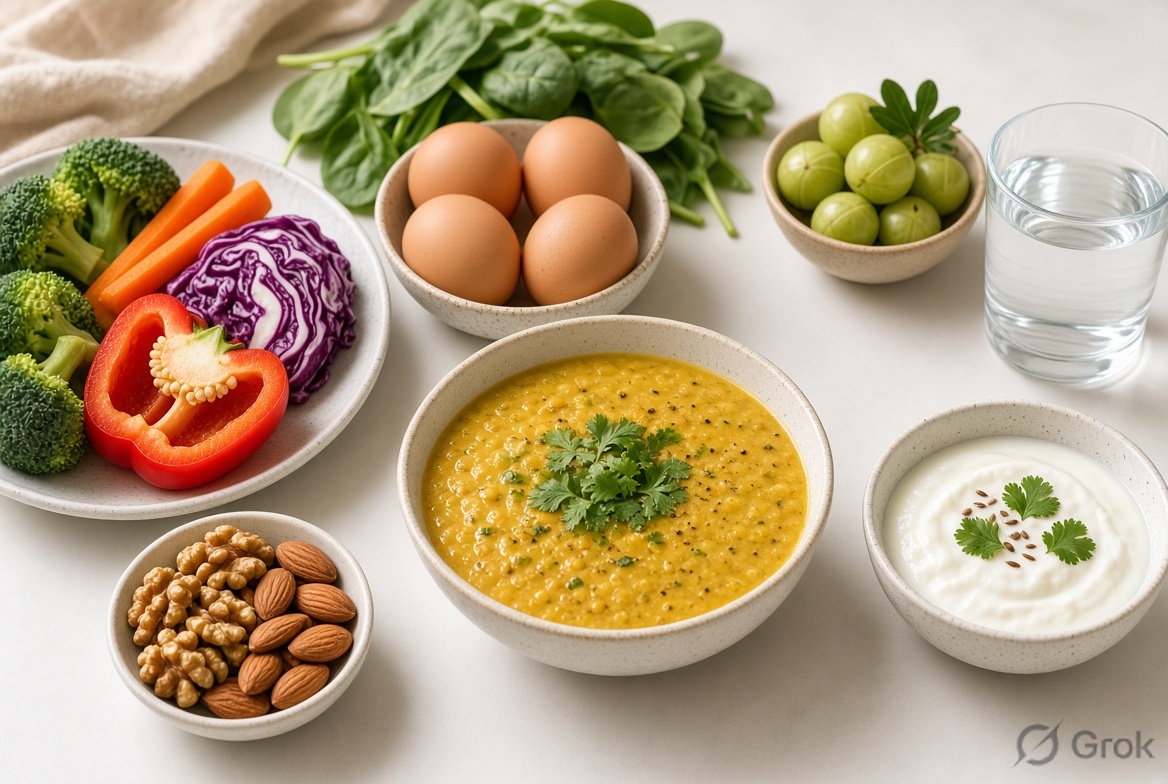
Best Foods for Healthy Aging
Aging is inevitable, but how we age is strongly influenced by daily habits — especially what we eat. The right foods can support muscle strength, brain function, bone density, heart health, and immune resilience as the years pass. A nutrient-rich diet does not stop aging, but it can significantly improve the quality of those years.
This detailed guide covers the best foods for healthy aging that are practical and suitable for long-term use.
Key Nutritional Goals for Healthy Aging
- Preserve muscle mass and strength
- Support brain and cognitive function
- Maintain bone density
- Reduce chronic inflammation
- Support heart and metabolic health
- Protect against oxidative stress
1. High-Quality Protein at Every Meal
After the age of 40–50, the body becomes less efficient at building muscle. Adequate protein intake is essential to slow age-related muscle loss (sarcopenia). Include eggs, dal, paneer, fish, chicken, or curd in every meal. Aim for a good protein source at breakfast, lunch, and dinner.
2. Colourful Vegetables and Leafy Greens
Vegetables provide fibre, antioxidants, potassium, and vitamins that support blood pressure, gut health, and cellular protection. Dark leafy greens are especially valuable for lutein, folate, and vitamin K.
3. Berries and Antioxidant-Rich Fruits
Berries, amla, pomegranate, and other deeply coloured fruits are rich in polyphenols that help protect the brain and blood vessels from oxidative damage. Regular intake is linked with better cognitive health over time.
4. Nuts and Seeds
Almonds, walnuts, flaxseeds, and pumpkin seeds supply healthy fats, vitamin E, magnesium, and plant protein. A small handful daily supports heart and brain health.
5. Fatty Fish or Plant Omega-3 Sources
Omega-3 fats support brain function, reduce inflammation, and benefit heart health. Fatty fish or flaxseeds, chia seeds, and walnuts are excellent options.
6. Fermented Foods
Curd and other traditional fermented foods support gut microbiome diversity. A healthy gut is increasingly linked with better immunity, mood, and metabolic health as we age.
7. Adequate Calcium and Vitamin D Support
Dairy or curd, ragi, sesame seeds, and leafy greens contribute to bone health. Vitamin D (from sunlight or supplementation when needed) is equally important for calcium absorption and muscle function.
Foods and Habits That Accelerate Aging
- High intake of ultra-processed foods and sugar
- Chronic excess calorie intake leading to obesity
- Smoking and excess alcohol
- Very low protein diets
- Chronic sleep deprivation and high stress
Sample Daily Pattern for Healthy Aging
- Breakfast: Eggs or paneer + vegetables or a handful of nuts
- Lunch: Dal + large portion of vegetables + salad + curd
- Evening: Fruit + a few walnuts or seeds
- Dinner: Protein + plenty of vegetables + small portion of whole grain if needed
Lifestyle Habits That Multiply the Benefits
- Strength training 2–3 times per week
- Daily walking
- 7–8 hours of quality sleep
- Stress management
- Social connection and mental engagement
- Regular health check-ups
Frequently Asked Questions
Is it too late to start eating better after 50 or 60?
No. Research shows that improving diet and lifestyle at any age can still produce meaningful benefits for strength, energy, and disease risk.
Do I need many supplements for healthy aging?
A food-first approach is best. Supplements (such as vitamin D, B12, or protein) may be useful when deficiencies exist, preferably under medical guidance.
How important is protein as we age?
Extremely important. Higher protein needs and resistance training are two of the most effective strategies to maintain independence and strength with age.
Final Words
The best foods for healthy aging focus on adequate protein, colourful vegetables and fruits, nuts and seeds, omega-3 sources, fermented foods, and bone-supporting nutrients. When these are combined with strength training, daily movement, good sleep, and stress control, they form a powerful foundation for staying stronger, sharper, and more independent for longer.