
Best Exercises for Lower Back Pain After Delivery
Lower back pain is one of the most common complaints after childbirth. The combination of pregnancy-related postural changes, weakened core muscles, hormonal ligament laxity, and the physical demands of caring for a newborn often leads to persistent discomfort. Many new mothers struggle with this pain while lifting the baby, breastfeeding, or even sitting for long periods.
This guide covers the best safe exercises for lower back pain after delivery, focusing on gentle, effective movements that support recovery without risking injury. Always get clearance from your doctor before starting any exercise, especially after a C-section.
Why Lower Back Pain Occurs After Delivery
During pregnancy, the growing belly shifts the centre of gravity forward, increasing the curve in the lower back. Abdominal muscles stretch and may separate (diastasis recti). After delivery, these muscles remain weak while the demands of carrying and feeding the baby continue. Poor posture during breastfeeding and lifting also contribute significantly.
Important Safety Guidelines
- Wait for medical clearance (usually 6 weeks for normal delivery, longer for C-section)
- Stop any exercise that causes sharp pain
- Focus on quality of movement rather than intensity
- Breathe normally — avoid holding your breath
- Start slowly and progress gradually
Best Exercises for Postnatal Lower Back Pain
1. Pelvic Tilts
Lie on your back with knees bent and feet flat. Gently flatten your lower back against the floor by tilting the pelvis, then release. This activates the deep core and relieves tension.
Perform 8–12 slow repetitions, 1–2 sets.
2. Bird-Dog (Modified)
Start on hands and knees. Keep the spine neutral. Slowly extend one arm forward and the opposite leg backward while maintaining balance. Return to start and switch sides.
This strengthens the core and back stabilizers without excessive pressure.
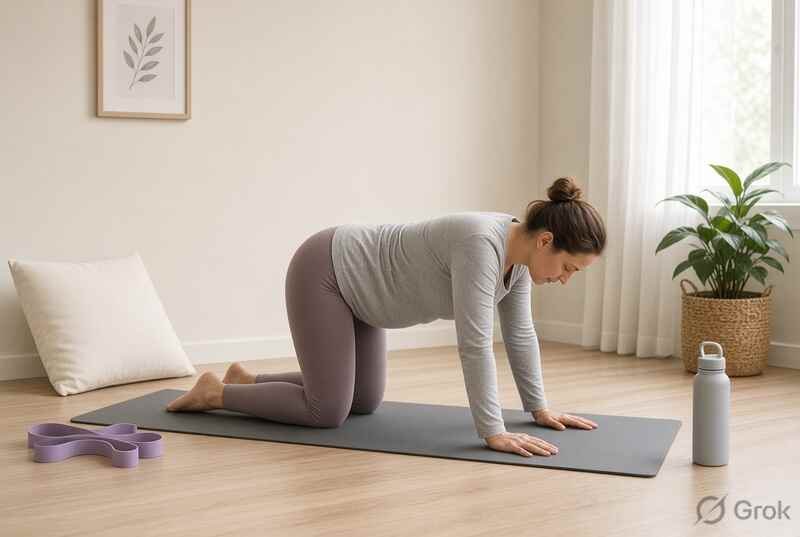
3. Cat-Cow Stretch
On hands and knees, alternate between arching the back (cow) and rounding it (cat) with the breath. This improves mobility and reduces stiffness in the spine.
4. Glute Bridges
Lie on your back with knees bent. Press through the heels to lift the hips while squeezing the glutes. Lower slowly. Strong glutes support the lower back.
Start with 8–10 repetitions.
5. Child’s Pose (Balasana)
A gentle resting pose that stretches the lower back and hips. Kneel and sit back toward the heels while reaching the arms forward. Hold and breathe deeply.
6. Wall Angels or Scapular Retractions
These help correct upper back posture that often contributes to lower back strain from feeding and carrying the baby.
Additional Supportive Habits
- Practice good breastfeeding posture — bring the baby to you rather than hunching
- When lifting the baby, bend at the knees and keep the baby close to your body
- Avoid prolonged sitting in one position
- Use a supportive pillow while feeding
- Take short walking breaks throughout the day
When to Seek Professional Help
Consult a doctor or physiotherapist if:
- Pain is severe or radiating into the legs
- There is numbness or weakness
- Pain worsens despite gentle exercise
- You suspect significant diastasis recti
Frequently Asked Questions
How soon can I start these exercises?
Only after medical clearance. Many women begin very gentle pelvic tilts and breathing exercises earlier under guidance.
Can these exercises help with diastasis recti?
Yes, when performed correctly. Focus on deep core activation rather than traditional crunches.
How often should I do them?
Most women benefit from 10–15 minutes daily or every other day, focusing on consistency rather than long sessions.
Final Words
The best exercises for lower back pain after delivery are gentle, controlled movements that rebuild core stability, improve posture, and increase strength in the supporting muscles. Pelvic tilts, bird-dog, glute bridges, and mobility work form a solid foundation. Combine these with better daily posture habits and patience. Recovery takes time, but consistent gentle effort leads to meaningful improvement in comfort and function.