
Natural Ways to Improve Eyesight
Many people believe that eyesight only weakens with age and that nothing can be done beyond wearing glasses or contact lenses. While some conditions require medical treatment or corrective lenses, there are several natural ways to support eye health, reduce strain, and maintain better vision for longer. Nutrition, screen habits, and simple daily practices play a significant role.
This guide covers practical natural ways to improve and protect eyesight, focusing on foods, lifestyle habits, and eye care techniques that are realistic for everyday life.
Understanding Eye Health
The eyes are highly metabolically active and sensitive to oxidative stress, poor circulation, and nutritional gaps. Conditions such as digital eye strain, dry eyes, and age-related decline can be influenced by daily habits. Supporting the eyes from the inside and reducing external stress produces the best long-term results.
1. Eat Foods Rich in Eye-Supporting Nutrients
Certain nutrients are especially important for the retina, lens, and overall visual function:
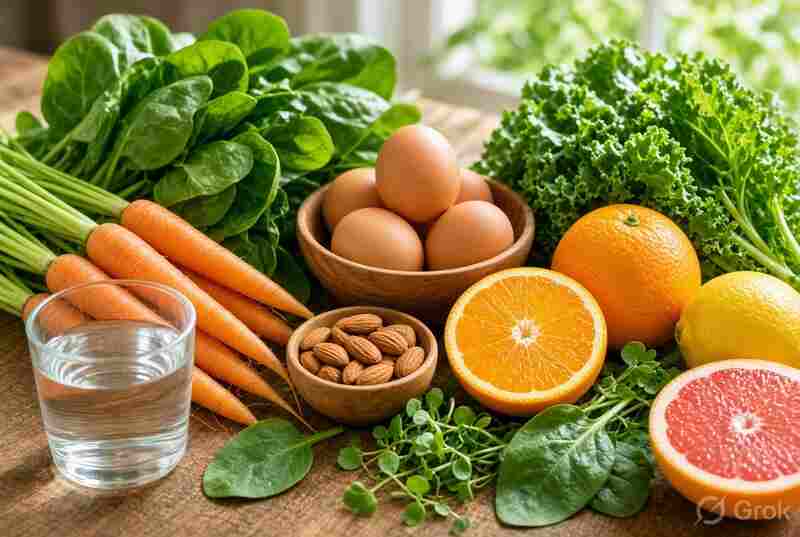
- Vitamin A and Beta-Carotene: Carrots, spinach, sweet potato, and pumpkin
- Lutein and Zeaxanthin: Leafy greens (spinach, kale, collard greens), eggs
- Omega-3 Fatty Acids: Walnuts, flaxseeds, chia seeds, and fatty fish
- Vitamin C: Amla, oranges, guava, lemon, and bell peppers
- Vitamin E and Zinc: Almonds, seeds, and nuts
A colourful plate with plenty of green leafy vegetables, orange vegetables, and some nuts provides most of these nutrients naturally.
2. Follow the 20-20-20 Rule for Screens
Digital eye strain is one of the biggest modern problems. Every 20 minutes, look at something at least 20 feet away for 20 seconds. This simple habit reduces fatigue, dryness, and blurred vision caused by prolonged near work.
Also, keep screens slightly below eye level and maintain good lighting to avoid glare.
3. Blink Consciously and Stay Hydrated
People blink much less while looking at screens, which leads to dry eyes. Make a conscious effort to blink fully and regularly. Staying well hydrated also supports natural tear production.
4. Protect Eyes from Harsh Sunlight
UV exposure contributes to cataract formation and other long-term damage. Wear good-quality sunglasses that block UV rays when outdoors, especially during peak sunlight hours.
5. Practice Simple Eye Exercises
While exercises cannot reverse refractive errors completely, they help reduce strain and improve flexibility of the eye muscles:
- Near and far focusing (hold a finger close, focus, then look into the distance)
- Gentle eye rolling in both directions
- Palming (rub hands together to generate warmth and place over closed eyes for 30–60 seconds)
Spend 5 minutes on these exercises once or twice a day, especially if you work long hours on a computer.
6. Maintain Good Overall Health
Conditions such as diabetes and high blood pressure affect the small blood vessels in the eyes. Keeping blood sugar and blood pressure under control is one of the best long-term strategies for protecting vision.
Regular physical activity improves circulation throughout the body, including the eyes.
7. Get Adequate Sleep
During sleep, the eyes recover from daily strain and dryness. Poor or insufficient sleep often leads to tired, irritated eyes the next day. Aim for 7–8 hours of quality sleep.
Foods to Emphasise Daily
- One serving of leafy greens
- Carrots or other orange vegetables several times a week
- A small handful of almonds or walnuts
- Citrus fruits or amla
- Eggs (if they suit your diet)
When to See an Eye Specialist
Natural methods support eye health but do not replace professional care. Visit an eye doctor if you experience:
- Sudden vision changes
- Frequent headaches related to vision
- Difficulty seeing at night
- Eye pain, redness, or discharge
- Family history of serious eye conditions
Regular eye check-ups become more important after the age of 40.
Frequently Asked Questions
Can diet really improve eyesight?
Diet cannot correct refractive errors (power of glasses) in most cases, but it strongly supports retinal health, reduces risk of age-related decline, and helps with dryness and strain.
How long before food changes help?
Nutritional benefits build over weeks and months. Consistency is more important than short-term intensity.
Are eye supplements necessary?
Most people can get adequate nutrients from food. Supplements may help in specific deficiencies or higher-risk cases under professional guidance.
Final Words
Natural ways to improve and protect eyesight focus on nutrient-rich food (especially leafy greens, carrots, and antioxidants), reducing screen strain, proper hydration, UV protection, and overall health management. These habits will not eliminate the need for glasses in most people, but they significantly support long-term eye comfort and reduce the risk of common problems. Start with better daily nutrition and the 20-20-20 rule — these two changes alone produce noticeable benefits for many. Treat your eyes as a long-term investment, and they will serve you better for decades.