
Natural Ways to Increase Breast Milk Supply
Many new mothers worry about whether they are producing enough milk for their baby. While most women produce adequate milk with proper latch and frequent feeding, some experience low supply due to stress, delayed initiation of breastfeeding, certain medical conditions, or infrequent nursing. Before turning to supplements or formula, several natural methods can support and increase breast milk production.
This guide covers evidence-informed and traditionally used natural ways to increase breast milk supply, with practical tips suited for Indian mothers.
How Milk Supply Works
Breast milk production works on a supply-and-demand basis. The more effectively and frequently milk is removed from the breast (through nursing or pumping), the more milk the body produces. Hormones prolactin and oxytocin play key roles. Stress, exhaustion, and poor latch can interfere with this process.
Best Natural Ways to Support Milk Supply
1. Frequent and Effective Feeding
This is the most important factor. Nurse on demand, ensure a good deep latch, and avoid long gaps between sessions, especially in the early weeks. If the baby is not emptying the breast well, consider pumping after feeds.
2. Stay Well Hydrated
Drink water regularly throughout the day. Keep a bottle of water next to your feeding area. Dehydration can negatively affect supply.
3. Oats
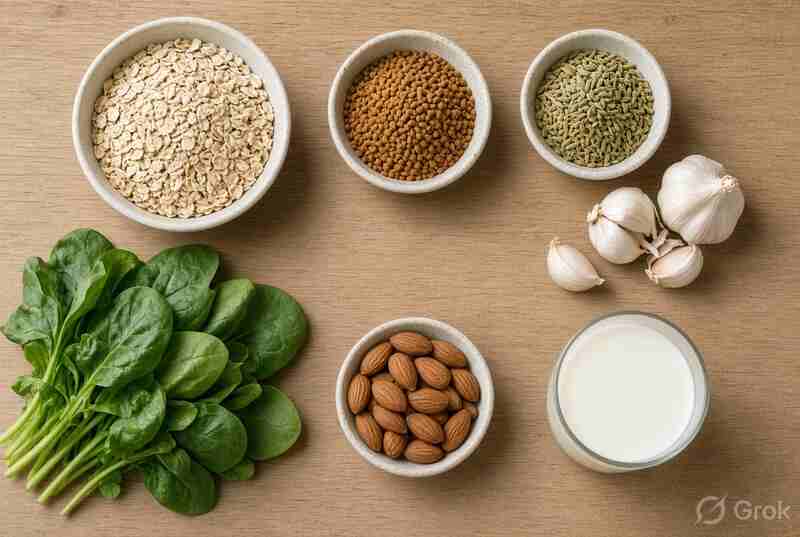
Oats are a popular galactagogue (milk-supporting food). A bowl of oats porridge or oatmeal is a simple daily addition many mothers find helpful.
4. Fenugreek (Methi) Seeds
Fenugreek is one of the most widely used traditional herbs for milk supply. It can be taken as soaked seeds, methi water, or in capsule form. Start with a moderate amount and observe the effect. Some women notice a maple-like smell in sweat or urine, which is harmless.
5. Fennel Seeds (Saunf)
Fennel is another traditional ingredient believed to support lactation. It can be chewed after meals or consumed as light fennel tea.
6. Garlic and Leafy Greens
Garlic appears in many traditional recommendations. Leafy green vegetables provide nutrients that support overall health and lactation.
7. Adequate Calories and Protein
Breastfeeding requires extra energy. Eating enough — including protein-rich foods such as dal, dairy, eggs, and nuts — supports both milk production and maternal health.
8. Rest and Stress Reduction
Exhaustion and high stress can lower supply. Accept help with household work, sleep when the baby sleeps when possible, and practice simple relaxation techniques.
Helpful Daily Habits
- Skin-to-skin contact with the baby
- Nursing in a calm, comfortable environment
- Avoiding unnecessary formula top-ups (unless medically advised) that can reduce demand
- Checking latch with a lactation consultant if pain or poor milk transfer is suspected
When to Seek Professional Help
Contact a doctor or lactation consultant if:
- The baby is not gaining weight adequately
- You feel your supply is suddenly dropping
- There is pain during feeding or signs of infection
- You have a history of breast surgery or hormonal conditions
Frequently Asked Questions
How long do galactagogues take to work?
Some mothers notice a difference within a few days; others take 1–2 weeks of consistent use along with frequent feeding.
Can stress really reduce milk supply?
Yes. High stress can interfere with the let-down reflex and overall production.
Is it normal for supply to feel lower in the evening?
Yes. Many mothers notice cluster feeding and a feeling of lower supply in the evenings. This is often normal.
Final Words
Natural ways to increase breast milk supply centre on frequent effective milk removal, good hydration, nourishing food, and reduced stress. Oats, fenugreek, fennel, garlic, and leafy greens are commonly used supportive foods and herbs. The foundation remains demand and supply — the more milk that is removed, the more the body produces. Be patient with yourself, seek skilled lactation support when needed, and remember that most mothers can successfully feed their babies with the right guidance and habits.