
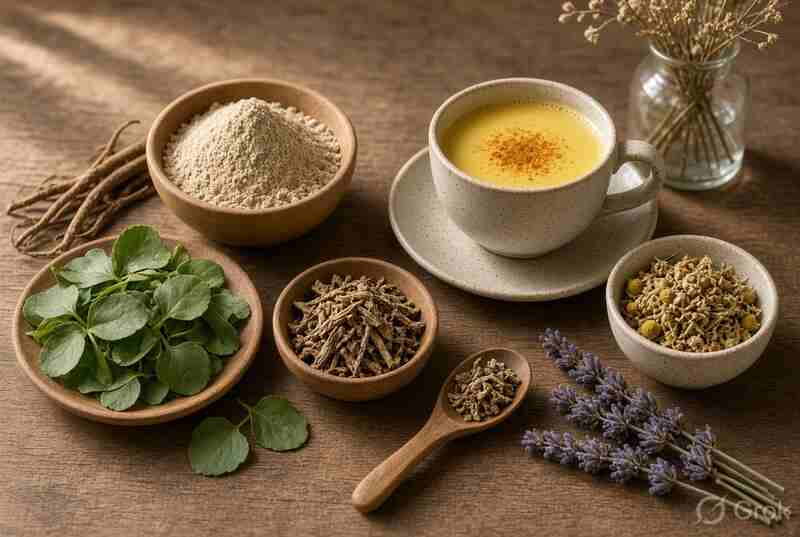
Best Ayurvedic Herbs for Better Sleep
Poor sleep has become a widespread issue. Stress, excessive screen time, irregular schedules, and high caffeine intake disrupt the body’s natural sleep cycle. While sleeping pills may help in the short term, they often leave people dependent or groggy. Ayurveda offers several herbs that support deeper, more restorative sleep without the same level of side effects.
This guide covers the best Ayurvedic herbs for better sleep, how they work, recommended ways to use them, and important precautions.
Why Sleep Suffers According to Ayurveda
Ayurveda links sleep problems mainly to aggravated Vata (restlessness, racing thoughts) or Pitta (heat, irritability). When the mind remains active at night, deep sleep becomes difficult. Herbs that calm the nervous system and balance these doshas are traditionally recommended.
Top Ayurvedic Herbs for Sleep
1. Ashwagandha
Ashwagandha is one of the most researched adaptogenic herbs. It helps the body cope with stress and reduces cortisol levels, which often interfere with sleep. Many people notice improved sleep quality after consistent use.
How to use: ½ teaspoon of high-quality ashwagandha powder with warm milk at night is a common method. Capsules are also widely available.
2. Brahmi (Bacopa monnieri)
Brahmi is known for calming the mind and improving mental clarity. It is particularly helpful when overthinking or anxiety keeps a person awake.
It can be taken as a powder with warm milk or as a standardized extract.
3. Jatamansi
Jatamansi has traditional use as a strong nervine tonic and sleep-supportive herb. It is often recommended for people who have difficulty falling asleep due to mental activity.
It is usually taken under guidance because of its potency.
4. Tagar (Valerian equivalent in Ayurveda)
Tagar is used for its calming and sleep-inducing properties. It helps relax the nervous system and is useful for occasional sleeplessness.
5. Shankhapushpi
This herb is traditionally used to calm the mind and support mental peace. It is often combined with other herbs in sleep formulations.
6. Warm Milk with Nutmeg or Cardamom
A small pinch of nutmeg (very small quantity) in warm milk is a classic home remedy. Cardamom also adds a calming effect. This is gentle and suitable for most adults.
How to Use These Herbs Effectively
- Take sleep-supporting herbs 30–60 minutes before bedtime
- Combine with a consistent sleep schedule
- Reduce screen exposure at least one hour before bed
- Keep the bedroom cool, dark, and quiet
- Avoid heavy meals and caffeine late in the day
Lifestyle Practices That Enhance the Effect of Herbs
- Practice gentle yoga or light stretching in the evening
- Try slow breathing exercises or guided relaxation
- Avoid stimulating conversations or work close to bedtime
- Maintain regular meal and sleep timings
Precautions
- Pregnant and breastfeeding women should consult a doctor before using these herbs
- Start with small doses to assess tolerance
- If you are on medication for anxiety, depression, or blood pressure, seek medical advice
- High-quality, authentic herbs matter – poor quality products give poor results
Frequently Asked Questions
How long do Ayurvedic herbs take to improve sleep?
Some people notice benefits within a few days, while others need 2–3 weeks of consistent use.
Can I take Ashwagandha and Brahmi together?
Yes, they are often used together in traditional formulations. Start with low doses.
Are these herbs habit-forming?
When used appropriately, they are not considered habit-forming like conventional sleeping pills.
Final Words
The best Ayurvedic herbs for better sleep — Ashwagandha, Brahmi, Jatamansi, and supportive herbs like Tagar and Shankhapushpi — work by calming the nervous system and reducing the impact of stress. They give the best results when combined with good sleep hygiene. Start with one herb, observe how your body responds, and build a consistent evening routine. Over time, natural and restorative sleep becomes much more achievable.