
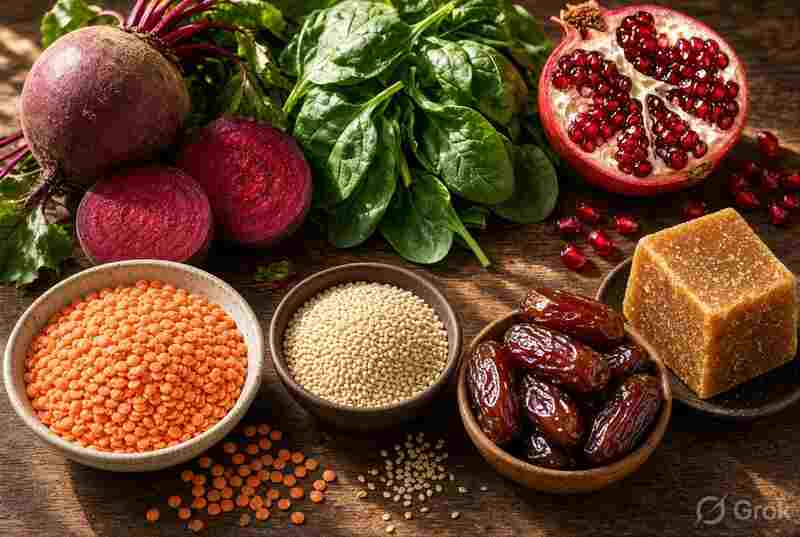
Best Foods to Increase Hemoglobin
Low hemoglobin is a widespread issue, especially among women, adolescents, and people with poor dietary diversity. Hemoglobin is the protein in red blood cells that carries oxygen. When levels drop, symptoms such as fatigue, weakness, pale skin, shortness of breath, and poor concentration appear. While severe deficiency needs medical treatment, many people can raise hemoglobin through targeted nutrition.
This guide lists the best foods to increase hemoglobin, explains how to improve iron absorption, and shares practical ways to include them in Indian meals.
Understanding Hemoglobin and Iron
Iron is a key building block of hemoglobin. There are two types of dietary iron: heme iron (from animal sources, better absorbed) and non-heme iron (from plant sources). Vitamin C significantly improves the absorption of plant iron. Certain substances (tea, coffee, calcium in large amounts at the same meal) can reduce absorption.
1. Beetroot
Beetroot is popular for supporting blood health. It contains folate, vitamin C, and plant compounds that support red blood cell production. Include grated beetroot salad, beetroot raita, or a small glass of diluted beetroot juice.
2. Pomegranate
Pomegranate provides iron, vitamin C, and antioxidants. Eating the seeds daily or drinking fresh pomegranate juice (without added sugar) is a traditional recommendation for improving blood parameters.
3. Green Leafy Vegetables
Spinach, fenugreek leaves (methi), amaranth, and other greens contain iron and folate. Pair them with lemon juice or other vitamin C sources to enhance absorption. Avoid consuming them with tea or coffee in the same meal.
4. Legumes and Lentils
Masoor dal, chana, rajma, and soybeans are good plant sources of iron and protein. Combining dals with vitamin C-rich vegetables or a squeeze of lemon improves iron uptake.
5. Jaggery (Gur) and Sesame Seeds
Jaggery contains iron and is often recommended in traditional diets. Black sesame seeds are particularly rich in iron and calcium. A small piece of jaggery with sesame seeds can be a useful addition (in moderation because of the sugar content).
6. Dates and Dried Fruits
Dates provide iron and energy. Soaked raisins and dried apricots also contribute. These are convenient options for people with low appetite.
7. Vitamin C Rich Foods (Essential Partners)
Without vitamin C, plant iron absorption remains low. Include amla, guava, orange, lemon, tomato, and bell peppers regularly, especially with iron-rich meals.
Practical Meal Combinations
- Spinach or methi sabzi with lemon juice
- Masoor dal with tomato and coriander
- Beetroot and carrot salad with lemon
- Pomegranate seeds added to curd or salads
- Small handful of dates or raisins as a snack
Habits That Improve Results
- Do not drink tea or coffee with main meals (wait at least 1–2 hours)
- Include vitamin C sources with plant iron foods
- Cook in iron utensils occasionally (traditional practice that can add small amounts of iron)
- Address gut health — poor digestion reduces nutrient absorption
- Treat underlying causes such as heavy periods or chronic blood loss under medical guidance
When Food Alone Is Not Enough
If hemoglobin is very low, if symptoms are severe, or if there is no improvement after 8–12 weeks of strong dietary efforts, consult a doctor. Blood tests, iron studies, and sometimes supplements or further investigation are required. Self-treating severe anemia can be risky.
Frequently Asked Questions
How long does it take to increase hemoglobin with food?
Noticeable improvement often takes 6–12 weeks of consistent high-iron, high-vitamin-C eating, provided there is no ongoing heavy blood loss.
Can vegetarians raise hemoglobin effectively?
Yes. With careful attention to iron-rich plant foods plus vitamin C, many vegetarians maintain healthy levels. It requires more planning than mixed diets.
Is beetroot juice a miracle?
It is helpful but not magical. It works best as part of an overall iron-rich diet rather than as a standalone solution.
Final Words
The best foods to increase hemoglobin include beetroot, pomegranate, green leafy vegetables, lentils, jaggery, sesame seeds, and dates, always paired with vitamin C sources for better absorption. Consistency matters more than any single food. Combine these dietary changes with the habit of separating tea/coffee from meals, and monitor progress with blood tests. For mild to moderate deficiency, nutrition is powerful. For severe cases, professional medical care remains essential. Building better blood health is a steady process that rewards daily effort.