
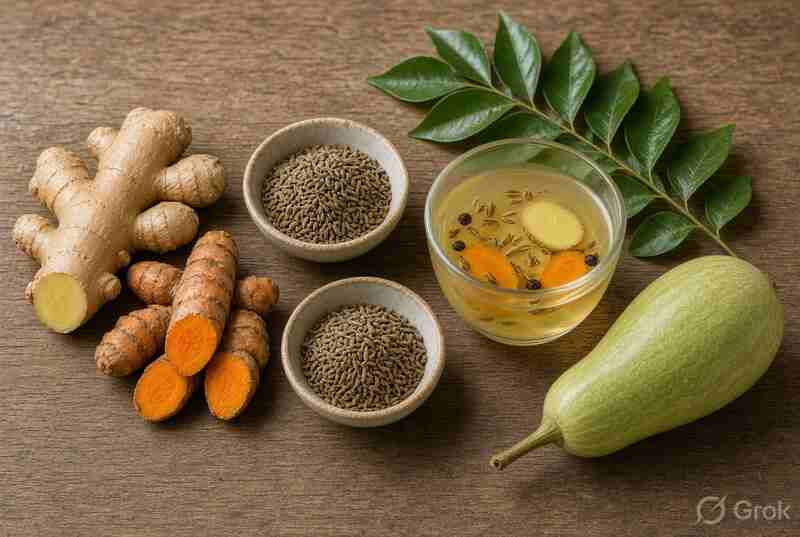
Ayurvedic Ways to Improve Digestion in Monsoon
Monsoon brings relief from summer heat, but it also brings a wave of digestive problems. According to Ayurveda, the digestive fire (Agni) becomes weak during the rainy season. This leads to gas, bloating, heaviness, loss of appetite, and increased risk of infections. Many people notice that even normal meals feel heavy during monsoon.
This guide explains practical Ayurvedic ways to improve digestion in monsoon using everyday ingredients and simple lifestyle adjustments that suit modern Indian households.
Why Digestion Weakens in Monsoon
Ayurveda explains that Vata and Pitta doshas can get aggravated while Kapha increases due to humidity. The body’s ability to digest food efficiently reduces. Combined with contaminated water, irregular hunger signals, and higher humidity, digestive issues become common.
Core Ayurvedic Principles for Monsoon Digestion
- Eat light, warm, and freshly cooked food
- Avoid heavy, oily, and cold foods
- Use digestive spices daily
- Keep meal timings regular
- Support Agni with simple home remedies
Best Ayurvedic Remedies and Practices
1. Ginger-Based Remedies
Ginger is one of the strongest Agni deepana (digestive fire enhancing) ingredients.
Grate fresh ginger, add a pinch of rock salt and a few drops of lemon. Eat a small piece 15 minutes before meals. You can also make ginger tea with tulsi and black pepper.
2. Ajwain and Cumin Water
Boil ajwain and cumin together and drink this water once or twice a day. It reduces gas, improves appetite, and clears Ama (toxins) that accumulate when digestion is weak.
3. Trikatu or Simple Spice Mix
A traditional combination of dry ginger, black pepper, and long pepper (or just dry ginger + black pepper) helps kindle digestive fire. Take a very small pinch with honey before meals if your digestion feels very sluggish.
4. Warm Water Throughout the Day
Cold water weakens Agni further. Sip warm water instead of cold water or refrigerated drinks during monsoon. This single change improves digestion for many people.
5. Use of Ghee in Moderation
A small amount of pure cow ghee in dal or khichdi helps lubricate the system and supports digestion when Agni is low. Avoid excess oil and deep-fried food.
6. Light Khichdi and Vegetable Soups
Moong dal khichdi with ghee and digestive spices is considered ideal monsoon food in Ayurveda. It is easy to digest, nourishing, and balancing.
7. Buttermilk with Spices
Spiced buttermilk (with roasted cumin, curry leaves, and ginger) is excellent for lunch in monsoon. It supports gut health without burdening digestion.
Foods to Prefer in Monsoon
- Moong dal, arhar dal (well cooked)
- Bottle gourd, ridge gourd, pumpkin, carrots
- Rice in moderation (older rice is preferred)
- Ginger, turmeric, black pepper, cumin, ajwain, hing
- Warm soups and stews
Foods to Avoid or Limit
- Curd at night
- Leafy greens in excess (harder to digest when Agni is low)
- Heavy non-vegetarian food and excessive fried items
- Cold drinks, ice cream, and refrigerated leftovers
- Excessive raw salads
Daily Routine Recommendations
- Wake up a little earlier and drink warm water
- Do light yoga or walking – avoid heavy exercise in high humidity
- Eat your largest meal at lunch when Agni is relatively stronger
- Keep dinner light and early
- Avoid daytime sleep as much as possible
Frequently Asked Questions
Can I eat fruits in monsoon?
Prefer seasonal fruits like pomegranate and ripe bananas in moderation. Avoid excessive water-rich fruits if digestion is weak.
Is fasting good during monsoon?
Light fasting or mono-diet of khichdi once a week can help, but avoid long fasts if energy is low.
How long does it take to improve digestion?
Most people notice better appetite and reduced heaviness within 7–10 days of consistent practice.
Final Words
Ayurvedic ways to improve digestion in monsoon focus on protecting and strengthening Agni. Simple practices like ginger before meals, warm water, spiced buttermilk, light khichdi, and avoiding cold heavy foods make a noticeable difference. Treat the rainy season as a time to eat lighter and more mindfully, and your digestion will remain stable throughout the months of humidity and fluctuating weather.