
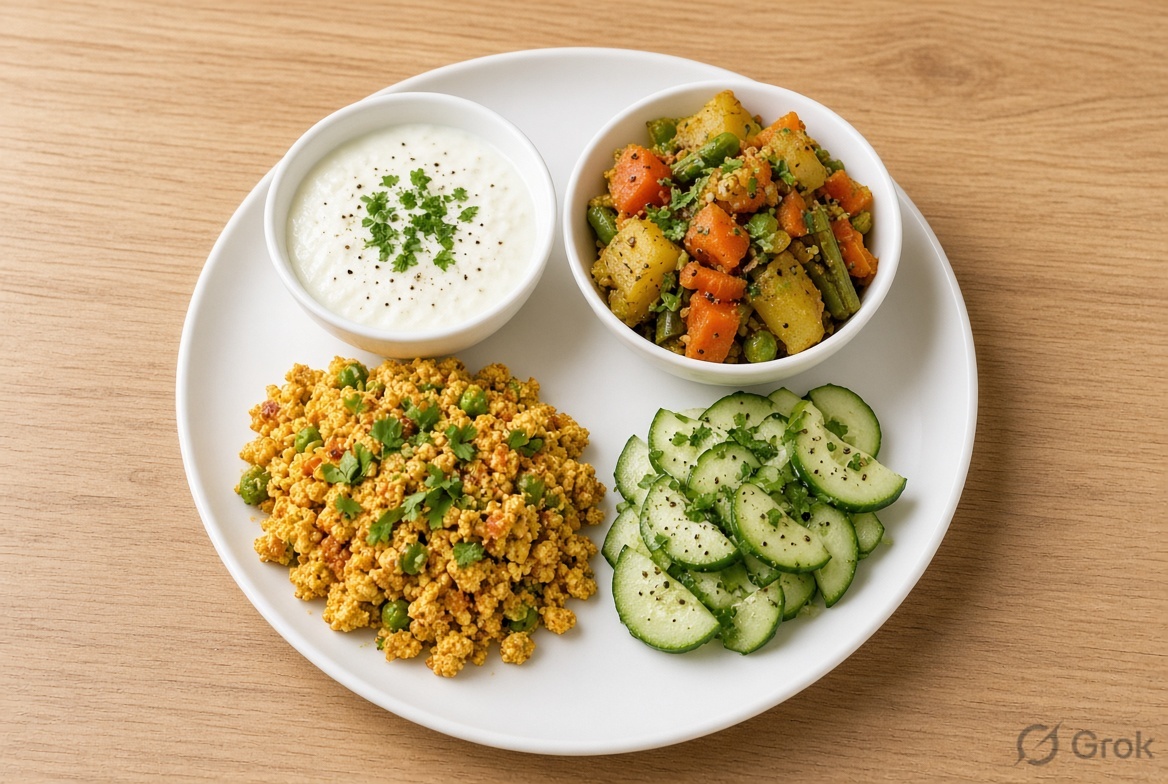
Low Carb Indian Diet Plan for Beginners
A low carb Indian diet can be very effective for weight loss, better blood sugar control, and reduced bloating. The biggest challenge for beginners is that traditional Indian meals are built around roti, rice, and potatoes. Many people think low carb means giving up Indian food completely – which is not true.
This guide gives you a practical low carb Indian diet plan for beginners that uses familiar ingredients, keeps meals satisfying, and does not feel extreme. You will get clear food lists, sample meal plans, and common beginner mistakes to avoid.
What is a Low Carb Diet?
A low carb diet reduces the intake of carbohydrates (especially refined ones) and focuses more on protein, healthy fats, and non-starchy vegetables. For most beginners, a moderate low carb approach (70–100 grams of net carbs per day) works better than very strict keto.
This level is sustainable and still allows some roti or rice in controlled portions.
Foods You Can Eat Freely
- All non-starchy vegetables (lauki, tinda, bhindi, cabbage, cauliflower, spinach, cucumber, tomato, etc.)
- Paneer, tofu, eggs, chicken, fish (if non-vegetarian)
- Dals in moderate quantity
- Curd, Greek yogurt, cheese
- Nuts and seeds in measured amounts
- Ghee, coconut oil, mustard oil in small quantities
- Lemon, spices, herbs, green chutney
Foods to Reduce or Avoid
- White rice, regular wheat roti, maida items
- Potatoes, sweet potatoes (limit)
- Sugar, jaggery, sweets, cold drinks
- Banana, mango, chikoo in large amounts
- Packaged snacks, biscuits, namkeen
- Fruit juices
Smart Low Carb Swaps for Indian Meals
- Replace regular roti with smaller multigrain or almond flour roti (or eat only 1)
- Replace rice with cauliflower rice or just more sabzi and dal
- Replace potato sabzi with lauki, tinda, or cabbage sabzi
- Replace sugary chai with cinnamon tea or black coffee
- Use besan or moong dal chilla instead of heavy paratha
7-Day Sample Low Carb Indian Diet Plan for Beginners
Day 1
Breakfast: Moong dal chilla (2) + mint chutney
Lunch: 1 small multigrain roti + large mixed vegetable sabzi + bowl of curd
Dinner: Paneer bhurji + salad + leftover sabzi
Day 2
Breakfast: Vegetable omelette or besan cheela
Lunch: Large dal + cabbage sabzi + cucumber salad (no roti)
Dinner: Grilled paneer or soya chunks + mixed vegetables
Day 3
Breakfast: Curd + seeds + handful of berries or apple
Lunch: 1 roti + palak paneer + salad
Dinner: Cauliflower rice khichdi style with vegetables
Day 4 to Day 7 follow similar pattern – high volume of vegetables, moderate protein, controlled carbs.
Important Tips for Beginners
- Do not cut carbs too drastically in the first week. Reduce slowly.
- Drink enough water and add electrolytes (pinch of salt + lemon) if you feel low energy.
- Keep protein high so you do not feel weak.
- Use spices liberally – Indian spices make low carb food tasty.
- Track how your clothes fit rather than only the weighing scale.
Common Beginner Mistakes
- Eating unlimited nuts and cheese (calories add up fast)
- Completely removing all carbs and then bingeing later
- Not eating enough vegetables and fibre
- Relying on packaged “low carb” products
- Expecting very fast weight loss in the first 3 days
Who Should Be Careful?
People with kidney issues, pregnant women, breastfeeding mothers, and those with history of eating disorders should consult a doctor before starting any restrictive diet.
Frequently Asked Questions
Can I eat dal in a low carb diet?
Yes, in moderate quantities. Dal provides protein and fibre.
Is this diet good for diabetes?
Many people with diabetes see better sugar control on lower carb diets, but medical supervision is advised.
How much weight can I lose?
Beginners often lose 2–4 kg in the first month, mostly from water weight and reduced bloating initially, followed by fat loss.
Final Words
A low carb Indian diet plan for beginners does not mean giving up Indian food. It means making smarter choices – more vegetables, adequate protein, and controlled portions of roti or rice. Start slowly, focus on consistency, and adjust based on how your body feels. This approach is sustainable and effective for long-term results.