
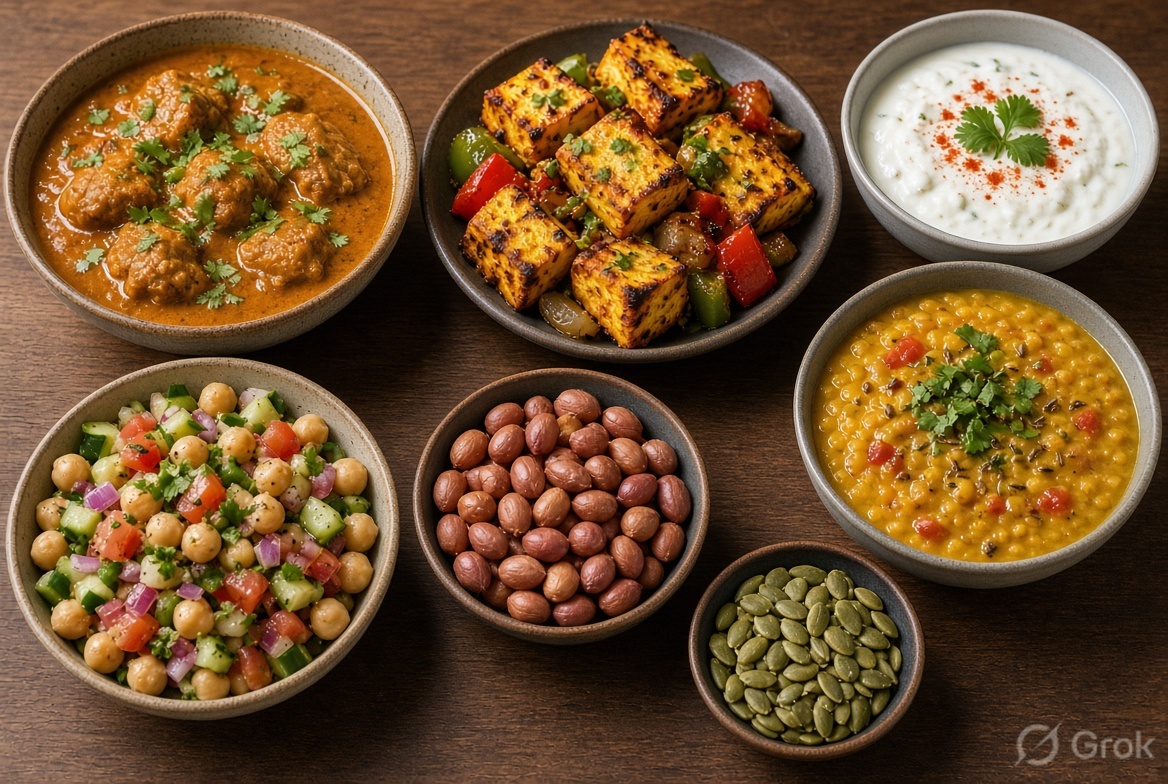
High Protein Vegetarian Foods for Muscle Gain in India
Building muscle on a pure vegetarian diet is 100% possible in India. The biggest mistake most vegetarian gym-goers make is not eating enough protein. They train hard but stay the same size because their daily protein intake stays around 40–50 grams, while muscle building needs 1.6–2.2 grams of protein per kg of body weight.
If you weigh 70 kg, you should aim for 110–140 grams of protein every day. This guide gives you the highest protein vegetarian foods easily available in every Indian market, along with practical ways to reach your protein target without expensive supplements.
Why Protein Is Critical for Muscle Gain
When you lift weights or do resistance training, you create small tears in muscle fibres. Protein provides the amino acids needed to repair and grow those fibres. Without enough protein, your body cannot build new muscle even if you train perfectly.
Vegetarian sources can fully support muscle gain if you combine different foods throughout the day and focus on total daily intake rather than one single “superfood”.
Top High Protein Vegetarian Foods in India
1. Soya Chunks (Nutrela) – Highest Protein
Dry soya chunks contain around 52 grams of protein per 100 grams. After soaking and cooking, 50–60 grams of dry soya chunks give you nearly 25–30 grams of protein. They are extremely cheap and widely available.
How to use: Soak in hot water for 15–20 minutes, squeeze out water, and cook like sabzi with onion, tomato and spices. You can also add them to pulao or make soya keema.
2. Paneer
Paneer gives approximately 18 grams of protein per 100 grams. Homemade paneer is better and cheaper than packaged versions. 150–200 grams of paneer in a day is very effective for muscle gain.
Best ways: Paneer bhurji, grilled paneer, paneer tikka (low oil), or paneer added to dal and sabzi.
3. Greek Yogurt / Thick Hung Curd
Regular curd has 3–4 grams protein per 100g, but hung curd or Greek yogurt can give 8–10 grams. It is excellent as a snack or post-workout meal.
4. Moong Dal, Toor Dal, Masoor Dal & Chana Dal
Most dals give 20–25 grams of protein per 100 grams dry weight. One large bowl of dal (cooked from 40–50g dry dal) provides 10–12 grams of protein. Eating dal twice a day is one of the easiest ways to increase protein.
5. Chickpeas (Kabuli Chana) and Black Chana
Boiled chana gives about 8–9 grams protein per 100 grams cooked weight. Chana salad with onion, tomato, lemon and chaat masala is a perfect high-protein snack.
6. Peanuts and Natural Peanut Butter
Peanuts contain around 25 grams protein per 100 grams. A handful of roasted peanuts or 2 tablespoons of natural peanut butter adds good protein and healthy fats.
7. Pumpkin Seeds, Watermelon Seeds and Flaxseeds
These seeds are protein-dense (25–30g per 100g). Just 2 tablespoons can add 5–6 grams of high-quality protein. Add them to curd, salads or smoothies.
8. Tofu
Tofu is becoming easily available in bigger cities and gives 8–10 grams protein per 100 grams. It absorbs spices well and can replace paneer in many recipes.
9. Quinoa
Quinoa is a complete protein (all nine essential amino acids) and gives about 14 grams protein per 100 grams cooked. It is costlier but excellent 2–3 times a week.
10. Milk and Whey Protein (Optional)
One litre of toned milk gives roughly 30–32 grams of protein. Many vegetarians also use plant-based or regular whey protein to conveniently hit high targets.
Sample High Protein Vegetarian Day (Approx 130g Protein)
- Breakfast: Moong dal chilla (2) + curd → 25g
- Mid-morning: 200g hung curd + seeds → 18g
- Lunch: 2 roti + large dal + soya chunk sabzi + salad → 35g
- Evening: Chana salad + peanuts → 18g
- Dinner: Paneer bhurji + vegetables + 1 multigrain roti → 30g
- Before bed: Glass of milk → 8g
Practical Tips to Hit High Protein Every Day
1. Always keep soaked soya chunks or boiled chana ready in the fridge.
2. Add one protein source in every meal (dal + paneer, or dal + soya, or curd + seeds).
3. Do not rely only on dal. Combine different sources.
4. Track your protein for 7 days using a simple notes app. Most people are shocked when they see their actual intake.
5. If budget allows, add one scoop of vegetarian protein powder post workout.
Common Mistakes Vegetarian Lifters Make
- Eating only rice and sabzi thinking “I eat a lot”
- Avoiding soya because of old myths (modern research supports moderate soya intake)
- Drinking protein shake but eating low protein the rest of the day
- Not eating enough total calories (muscle gain needs surplus)
Frequently Asked Questions
Can vegetarians build muscle as well as non-vegetarians?
Yes. Many successful natural bodybuilders and athletes are vegetarian. Protein total and training matter more than the source.
Is soya bad for males?
Moderate soya intake (30–50g dry soya chunks daily) is safe and effective for muscle gain according to current research.
How much protein do I need?
1.6 to 2.2 grams per kg of body weight if your goal is muscle gain.
Final Words
High protein vegetarian foods for muscle gain are easily available and affordable in India. Focus on soya chunks, paneer, dals, chana, curd and seeds. Hit your daily protein target consistently and combine it with progressive weight training. Results will come.